Each healthcare practice works hard then it should just to stay financially stable. A provider’s main focus is patient volume, staffing, or marketing.
But what if your practice is losing thousands of dollars every month, not because of patient volume, but because of incomplete documentation?
Documentation is the thing that is often overlooked and on which a reimbursement depends at the point of care. It’s not another administrative task but it’s essential for your revenue growth. It directly affects reimbursements, reduces claim denials, and improves overall revenue cycle performance.
But how does the POC charting system work? Let’s discuss and understand how proper POC charting can turn into a revenue-driving machine for your practice.
What Is POC (Point-of-Care) Charting?
Point-of-Care charting means documenting patient encounters in real time, right when the care is being delivered or immediately after. Instead of waiting until the end of the day or the end of the week, providers capture everything while it’s still fresh. For example:
- You just examined a patient
- You discussed symptoms, diagnosis, and treatment
- Instead of making quick notes and coming back later, you document everything on the spot
That’s called the POC charting system.
It’s usually done using EHR/EMR systems, tablets, or mobile devices and making it easier to keep records accurate and complete.
Why POC Charting Matters More Than You Think
Documentation isn’t just about keeping records. It’s directly linked to how much you get paid.
Insurance companies don’t pay for what you did. They pay for what you document properly.
So, if your documentation is incomplete, vague, or delayed, you’re basically leaving the money you’ve already earned. When you’ve done proper POC charting, it impacts:
- Accurate coding
- Faster claim submission
- Reduced claim denials
- Better compliance
- Higher reimbursement rates
All these factors together turn into increased practice revenue. But those practices that do not use it may look tedious work but once you put it into practice, it becomes an easy habit for you.
The Direct Link Between POC Charting and Revenue
Everyone wants to know the answer to this question.
When providers delay charting or rush through it later, a few things tend to happen:
- Missing details
- Incorrect codes
- Undocumented services
- Increased claim rejections
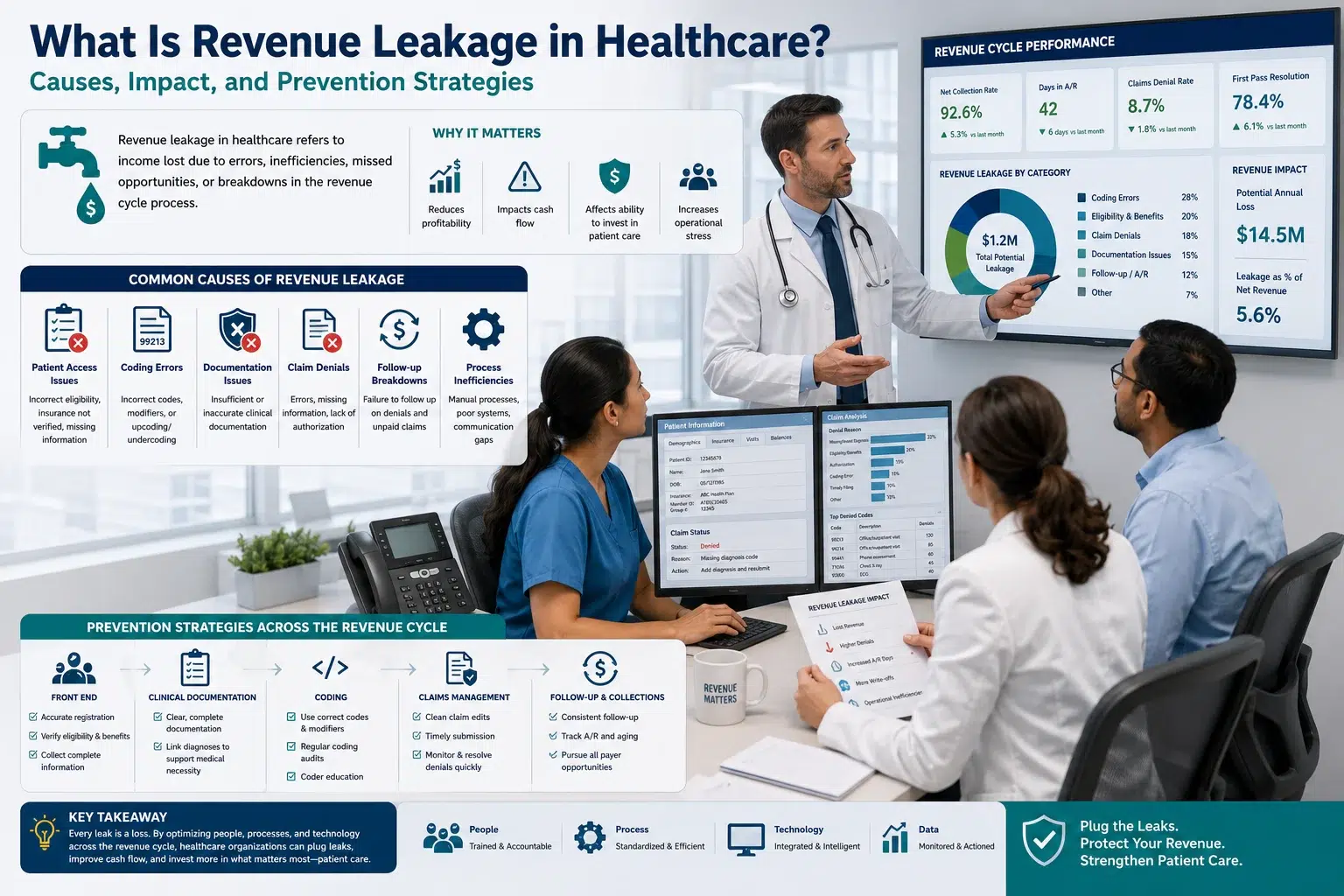
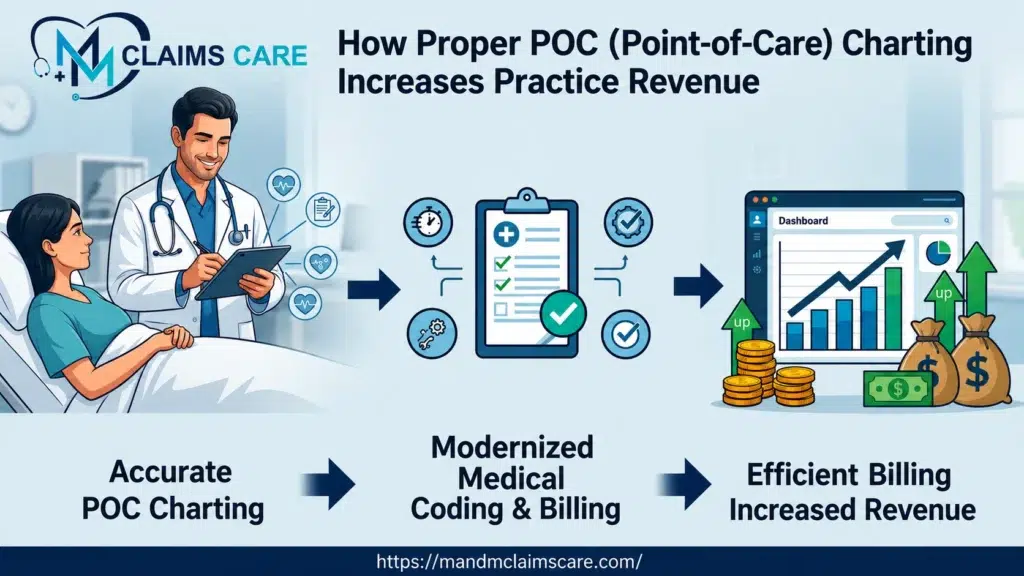
And at the end, your revenue leaks start. On the other hand, real-time charting captures everything accurately, which allows billers and coders to do their job properly. And you’ll see your clean claims, faster payments, and fewer denials. In short, better cash flow.
Improved Documentation Accuracy means Higher Reimbursements
It’s true that nobody remembers every detail hours later. That’s why when charting gets delayed, you forget important symptoms, the whole procedure is not fully documented and the medical necessity becomes unclear. And that leads to downcoding or underbilling.
But with proper POC charting:
- Every detail is captured instantly
- Providers document the full scope of care
- Coders can assign the most accurate and often higher-paying codes
This means you’re not undercharging for your services anymore.
Reduced Claim Denials and Rejections
Claim denials are now becoming one of the biggest challenges for revenue cycle management. Research shows that 30% of claims are denied due to documentation errors, such as:
- Missing information
- Inconsistent notes
- Lack of medical necessity
- Coding mismatches
When charting is done in real time, you’ll see how these errors get reduced. Why?
Because everything is fresh, complete, and clear
And when your documentation supports your billing, insurance companies have fewer reasons to deny your claims. Lower denials always lead to better cash flow.
Faster Billing and Quicker Payments
Delayed charting means delayed billing. It’s very simple.
If providers take days to complete notes, the billing team can’t submit claims on time. That slows down your entire revenue cycle. But POC charting helps to improve your entire billing operations when:
- Notes are completed immediately
- Coders can review faster
- Claims go out sooner
And the sooner claims are submitted, the sooner you get paid.
Better Coding Accuracy and Compliance
Coding isn’t guesswork; it depends entirely on documentation. According to documentation, you assign the right code but if your notes are vague, coders are forced to choose lower-level codes or request more clarifications, and this process takes time and ultimately delays the claim submission. But when charting is clear and detailed:
- Coders can confidently assign accurate codes
- You avoid compliance risks
- Audits become less stressful
This is especially important in this highly competitive healthcare environment, where audits and regulations are stricter than ever.
Capturing Every Billable Service
Many practices don’t even realize that:
If it’s not documented, it’s not billable.
Providers often perform multiple services during a patient visit but if those services aren’t properly documented in real time, they’re lost revenue.
POC charting ensures:
- Every procedure is recorded
- Every service is documented
- Nothing gets missed
Over time, this alone can significantly boost your revenue.
Stronger Medical Necessity Justification
Insurance companies don’t just want to know what you did; they want to know why you did it. That is why medical necessity has become important. Real-time charting helps providers:
- Clearly connect symptoms, diagnosis, and treatment
- Provide detailed reasoning
- Avoid vague or incomplete notes
This makes your claims much stronger and reduces the chances of denials.
Enhanced Workflow Efficiency
Let’s talk about something that providers really care about: Time.
Nobody wants to stay late just to finish charting. With proper POC charting:
- Documentation happens during the visit
- Less backlog builds up
- Providers spend less time catching up later
This helps to reduce burnout and focus on patients to improve the overall productivity.
And when your team is efficient, your revenue cycle runs smoother too.
Reduced Administrative Costs
Errors in medical billing are common and cost money. Denied claims, rework, resubmissions, they all add up.
When your documentation is accurate from the start, you’ll experience:
- Fewer claims that need correction
- Less staff time to fix the issues
- Reduced administrative costs
That’s how money is saved and earned.
Best Practices for Effective POC Charting
To get more effective results with POC charting, you should follow some practical tips:
- Don’t wait. Document during or immediately after the visit.
- Use smart templates to guide accurate documentation.
- Be specific to avoid vague language. The more detailed your notes, the better for revenue.
- Stay consistent, as standardized processes reduce errors and confusion.
- Train your team to make sure providers understand how documentation impacts billing.
The Role of Technology in POC Charting
Technology made everything easy and POC charting also. Modern EHR systems allow:
- Voice-to-text documentation
- Mobile charting
- Real-time updates
- Integrated coding support
When used correctly, these tools can actually improve both accuracy and efficiency. But remember that you can’t only rely on technology; you need the right processes and expertise behind it.
How M&M Claims Care Helps Maximize Revenue
When we talk about expertise, you need a partner like M&M Claims Care. Even with great charting practices, billing and coding get complicated sometimes. But an experienced medical billing company can help you make each process smooth. At M&M Claims Care:
- We make sure your charting supports proper coding and billing.
- Our experts ensure you’re using the most accurate and profitable codes.
- We catch issues before claims are submitted.
- We speed up the revenue cycle as we understand that faster claims lead to faster payments.
- We help your team improve documentation and billing processes over time.
In short, we turn your documentation into maximum revenue potential. If your practice is facing difficulties, let our experts review your documentation and billing processes and show you the revenue opportunities.
So take the right step forward and contact us at: +1 (267) 768-7915