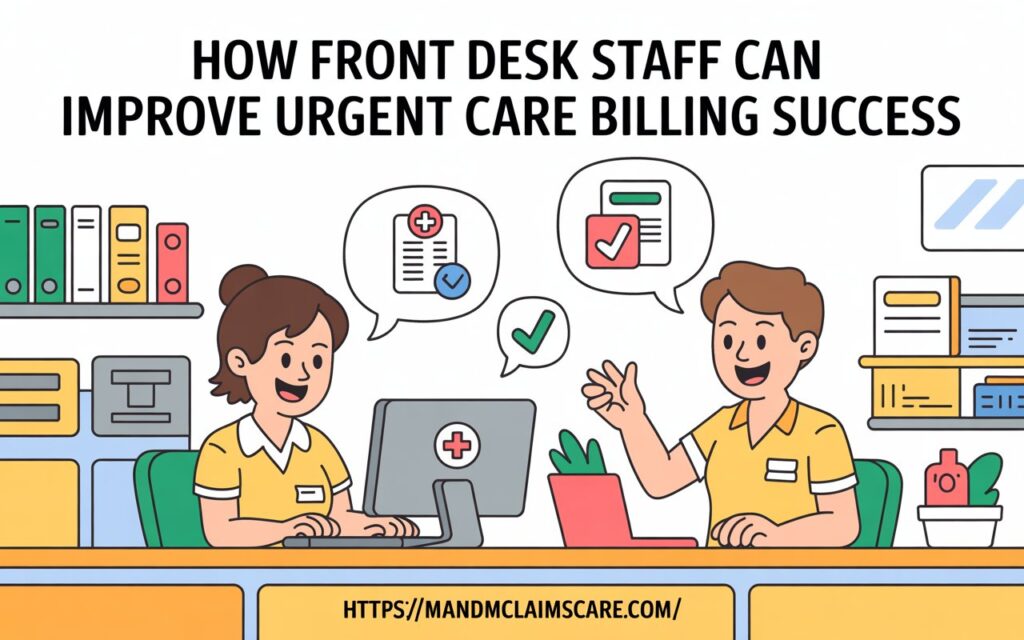
In urgent care, people have the misconception that the front desk just helps to check in patients, but they don’t understand that the front desk is the place where your revenue cycle quietly lives or dies. You can have the best providers, modern EHRs, and strong billing software, but if your front desk misses important steps, billing problems will start quickly. All the problems, including denied claims, delayed payments, frustrated patients, and constant rework, have one solution: the front desk.
As an experienced medical billing company, M&M Claims Care works with different urgent care clinics every day, and we see the same pattern over and over. When front desk staff are properly trained, supported, and aligned with billing teams, urgent care billing success improves dramatically. And when they are rushed, undertrained, or overwhelmed, revenue leaks start happening quietly and consistently, and disrupt the whole cash flow.
Let’s discuss how front desk staff play a massive role in urgent care billing success and what clinics can do to turn their front desk into a strong revenue asset instead of a hidden liability.
Why the Front Desk Is the Foundation of Urgent Care Billing
Urgent care is the name of quick services, and billing moves fast. In a short time span, patients walk in without appointments, insurance plans vary wildly, and visits often include multiple services. That’s why front desk accuracy matters more in urgent care than in any other medical specialty.
The front desk performs the three major steps. Before the visit, they book appointments and gather patient details. During the visit, they confirm insurance and handle co-pays. Afterward, they process claims and follow up on any remaining balances. All of these steps require accuracy.
Everything that happens at the front desk directly affects on:
- Claim acceptance
- Reimbursement speed
- Patient payment collection
- Denial rates
- Compliance risk
If the front desk gets it right initially, billing teams can do their job efficiently. If they get it wrong, even the best urgent care billing services can’t fix the damage.
Accurate Patient Registration: The First Billing Win
Billing success starts with clean and accurate patient data, and that responsibility is directly handed to the front desk.
Common Registration Mistakes That Hurt Billing
Even small errors can lead to claim denials, such as:
- Misspelled patient names
- Incorrect date of birth
- Wrong insurance ID numbers
- Outdated insurance plans
- Missing policyholder information
These mistakes seem minor at the moment, but insurance companies treat them as major issues.
How Front Desk Staff Can Improve Registration Accuracy
Front desk teams should be trained to:
- Verify photo ID and insurance cards at every visit
- Ask patients if their insurance has changed—even regulars
- Enter data carefully instead of rushing through screens
- Double-check demographics before finalizing check-in
A few extra seconds at registration can save weeks of billing headaches later. That’s why the front desk here can improve accuracy.
Insurance Verification: Where Revenue Is Protected
Insurance verification is one of the most critical front desk responsibilities in urgent care billing. This step can cause a great loss of revenue if you skip it.
Why Insurance Verification Matters So Much
Without proper verification, clinics risk:
- Treating patients whose plans don’t cover urgent care
- Providing services that require prior authorization
- Collecting the wrong copay or no payment at all
- Facing post-service denials
Insurance companies don’t pay based on good intentions but they pay based on patient eligibility and urgent care rules.
What Front Desk Staff Should Always Verify
Before the patient is seen, front desk staff should confirm:
- Active coverage on the date of service
- Urgent care benefits (not all plans cover UC visits)
- Copays, coinsurance, and deductibles
- In-network vs. out-of-network status
- Any visit limitations or exclusions
This one step alone can highly improve urgent care billing outcomes.
Collecting the Right Payments at the Right Time
Point-of-service collections are essential to the success of urgent care. After the patient leaves, it is generally more difficult to recover payment.
Why Front Desk Collections Matter
Insurance rarely covers 100% of urgent care visits. That means:
- Copays
- Deductibles
- Self-pay balances
If front desk staff don’t collect upfront, the clinic faces chasing payments later or writing them off completely.
How Front Desk Staff Can Improve Collections Without Awkwardness
Patients don’t mind paying when expectations are clear.
Front desk staff should:
- Explain copays confidently and clearly
- Provide cost estimates for self-pay visits
- Use friendly, matter-of-fact language
- Avoid apologizing for collecting money
When staff are comfortable discussing payments, patients are more likely to pay without resistance.
Proper Documentation Starts at the Front Desk
While providers handle clinical documentation, front desk documentation still plays an important role in billing accuracy.
Front Desk Documentation That Supports Clean Claims
Front desk staff should accurately record:
- Reason for visit (chief complaint)
- Injury details (work-related, auto accident, etc.)
- Referral or employer information
- Consent forms and signatures
This information directly affects coding, modifiers, and claim submission.
Any missing or incorrect front desk documentation leads to claim delays or denials, even when provider notes are solid.
Managing Self-Pay and Workers’ Compensation Visits
It is common that urgent care clinics have a high volume of non-traditional visits, including self-pay and workers’ comp cases
Self-Pay Visits
For the self-pay visits, front desk staff should:
- Explain pricing upfront
- Collect payment before or immediately after the visit
- Provide receipts and payment options
- Avoid vague or inconsistent pricing language
Here, it is important for front desk staff to have a clear communication as clarity reduces confusion and improves patient satisfaction.
Workers’ Compensation Visits
Workers’ comp billing is always complex. That’s why front desk mistakes can be costly. To save from these mistakes, staff must accurately capture:
- Employer details
- Claim numbers (if available)
- Adjuster information
- Injury dates and descriptions
Missing any of this information here can often result in unpaid claims.
Front Desk Communication Impacts Patient Satisfaction and Reviews
Billing success isn’t just about insurance—it’s also about patient trust. Front desk staff set all these factors for the entire visit. When patients feel informed and respected, they’re more likely to:
- Pay balances without conflict
- Respond to billing statements
- Leave positive reviews
- Return for future care
Confusing billing conversations, surprise charges, or unclear explanations always damage trust fast.
Reducing Claim Denials Starts at Check-In
Many urgent care claim denials are preventable, and many start at the front desk. But people can’t understand it, how?
Common Denials Linked to Front Desk Errors
- Invalid insurance information
- Coverage terminated
- Incorrect patient responsibility
- Missing accident details
- No authorization documented
Each denial costs time, money, and staff energy to fix.
How Front Desk Staff Help Prevent Denials
All these denials can be prevented when front desk teams:
- Verify insurance properly
- Collect accurate data
- Ask the right questions
- Document details clearly
These steps can greatly reduce denial rates before claims are even created.
Training Front Desk Staff for Billing Awareness
No doubt the front desk job is entirely different from that of a biller. The staff don’t need to be billers but they do need billing awareness.
What Billing Awareness Looks Like
Front desk teams should understand:
- Why accuracy matters
- How errors affect reimbursement
- Basic insurance terminology
- Their role in the revenue cycle
When staff understand the why, they perform better and care more.
Technology Helps, But People Still Matter Most
Modern urgent care clinics use advanced EHRs and billing software, but remember that the technology only works when data is entered correctly. Front desk staff must:
- Use systems properly
- Follow workflows consistently
- Avoid shortcuts that create errors
Technology supports billing but people drive it.
How M&M Claims Care Supports Front Desk–Driven Billing Success
At M&M Claims Care, we know urgent care billing doesn’t start with claim submission—it starts at the front desk. That’s why we help clinics:
- Identify front desk workflow gaps
- Improve insurance verification and urgent care processes
- Reduce registration errors
- Strengthen point-of-service collections
- Lower denial rates
- Improve overall revenue cycle performance
We not only provide medical billing services but when you outsource your urgent care billing to us, we work thoroughly with your team and align front desk operations with billing success.