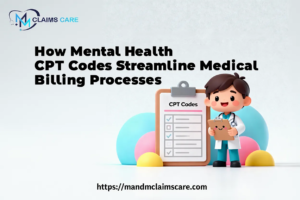
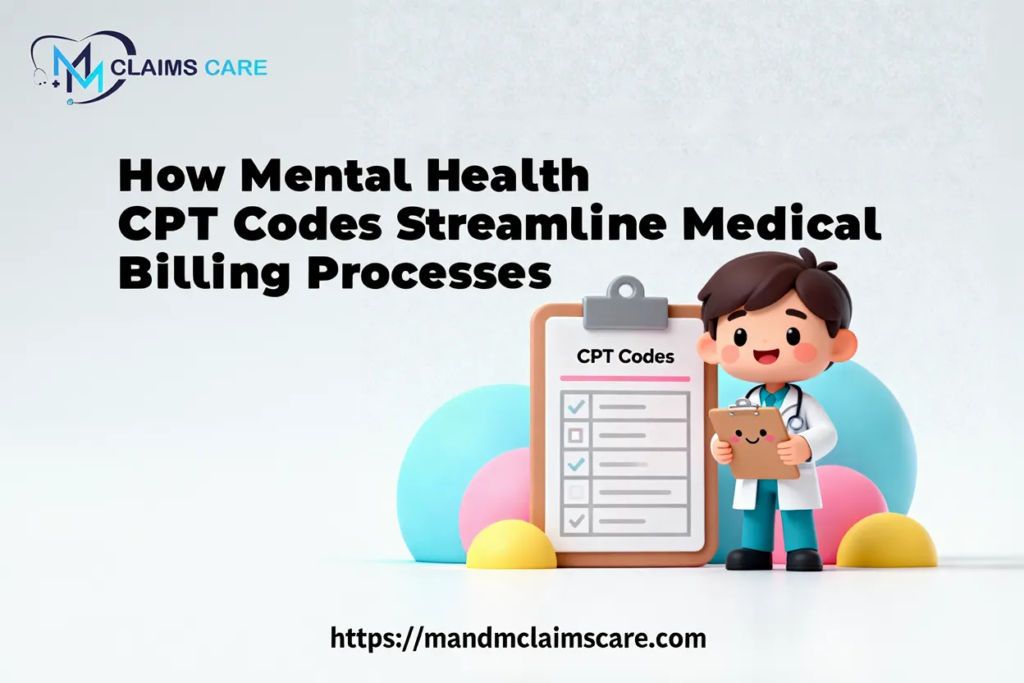
Mental health is a vast field and includes various subfields that make its billing more complicated. If you work in a mental health practice, you already know that delivering quality care isn’t what slows you down but billing can. Because the administrative side is a whole separate job due to verifying benefits, understanding coverage quirks, and dealing with payer-specific rules. But with the structured and efficient billing practice, mental health providers can reduce their costs by 15%. And to make billing processes more structured, clear, and consistent, mental health CPT codes were designed.
When used correctly, they don’t just help you get paid; they help you get paid faster, with fewer denials, less guesswork, and less back-and-forth with insurance companies.
That’s why so many practices lean on companies like M&M Claims Care to make sure these codes are used accurately, cleanly, and strategically.
So let’s discuss how mental health CPT codes streamline medical billing, why they matter more than most providers realize, and how the right billing partner can transform your whole workflow.
Mental health billing services are unique from other specialties. Sessions aren’t always the same length. Appointments can be virtual. Treatment plans shift often. And therapists, psychologists, and psychiatrists all have different scopes of practice. Without a standardized coding system, billing would always be confusing. That’s why CPT codes are utilized.
Basically, CPT (Current Procedural Terminology) codes are universal codes that describe what service was performed, how long it took, and sometimes even how complex it was. Instead of writing a 60-minute therapy session, you submit CPT 90837. Instead of explaining every detail of an evaluation, you use 90791 or 90792.
This system helps:
These CPT codes are just like the GPS for your billing process that show you the right path.
To understand how CPT codes make your billing more efficient, it is also important to know which ones show up most often in mental health claims.
This code covers the initial assessment without medical services. Think intake interview, history, and formulation of a plan.
Same as above, but used by psychiatrists or those providing medical evaluation, including prescriptions.
If you have short sessions, this code is used.
The most commonly billed therapy code.
Used for longer therapeutic sessions, which many clinicians prefer.
Whether the patient is present or not, these codes help structure more complex cases.
Used when treating multiple patients together, and is common in behavioral health programs.
Increasingly popular as mental health integrates with primary care.
These CPT codes bring predictability to mental health services where sessions, communication styles, and diagnoses vary. And insurance companies need predictability to release payments quickly.
Let’s show you how these codes make your billing smoother, cleaner, and more efficient.
Insurance companies are sticklers for detail. If the code doesn’t match:
Your claim is sent directly into a denial.
Proper use of CPT codes keeps everything aligned. When your codes match your documentation, you don’t have to worry about payers rejecting your claims.
Each CPT code has built-in expectations for what should be documented. For example:
When you know exactly what’s required, your documentation becomes more focused and streamlined without writing additional paragraphs to justify a session length.
Payers process standardized codes much faster than narrative descriptions. When your mental health CPT codes are accurate and clean:
That’s cash flow you don’t have to chase.
Mental health billing services are tricky. That’s why payers look closely at:
When CPT codes are used correctly, compliance becomes less stressful. You’re confident your claims can withstand an audit because they match the industry standards perfectly.
Telehealth services are common in mental health, which is why different CPT codes are adopted quickly. Therapists can now use the same psychotherapy codes for telehealth, but with modifiers and POS codes to show it happened virtually. This means:
Accurate mental health CPT coding removes the guesswork from telehealth billing.
When codes are used consistently, patterns emerge. You can easily track:
This data is necessary for practice growth. You can’t make any decision on guesses so you’ve to believe in numbers to move in the right direction.
Even though CPT codes make billing easier, mistakes still happen, and they can cost practices thousands every year. Some of the most common issues include:
Insurance companies watch this code in detail.
The session ran 50 minutes? It’s not 90837, so it may need to be 90834.
Just one missing modifier can result in a denial.
90791 vs. 90792 is a huge difference.
90846 vs. 90847 causes confusion all the time.
When these errors increased, they slowed down everything, including payment posting, cash flow, revenue cycle management, and even therapist productivity. That’s why providers need the best medical billing partner that understands their needs and saves their practice from denials and penalties. And there’s no better choice than M&M Claims Care, which is an experienced medical billing company in the US.
Billing is not just the name of submitting claims but it’s all about submitting them accurately the first time. With the years of experience, M&M Claims Care understands it and helps mental health practices do exactly that with:
We make sure every service is coded based on documentation, duration, and payer policies.
No more worrying about modifiers or POS codes.
Clean claims mean faster payments.
We catch errors before payers do and fight denials when they happen.
Our team ensures your coding meets CMS and payer standards.
Using CPT codes strategically helps maximize your reimbursements.
Psychiatrists, psychologists, therapists, and counselors each have unique coding needs. We handle them all.
When your billing is clean, accurate, and well-organized, everything else gets easier: scheduling, patient communication, provider productivity, and even patient satisfaction. With the right medical billing partner, mental health providers don’t have to worry about coding and can focus more on delivering the right care to people and helping them heal quickly. With M&M Claims Care, you don’t have to worry about coding mistakes or reimbursement delays ever again.